
Rebuilding Strength Safely After Hip Surgery: Modern Rehab Tools We Use

Why Modern Rehabilitation Matters After Hip Surgery
Whether you underwent hip arthroscopy, femoral neck fixation, periacetabular osteotomy (PAO), or total hip replacement, your recovery depends on one principle:Load the hip enough to stimulate healing, but not so much that you risk injury.
Traditional rehab is helpful—but modern technologies allow your body to recover:
Faster
Safer
With better movement quality
With more precise progress tracking
At the Puerto Rico Hip Institute, we combine clinical expertise with advanced rehabilitation tools to accelerate strength, mobility, bone health, and neuromuscular control. Here’s how each device plays a unique role in your recovery.
1. AlterG Anti-Gravity Treadmill®: Walk Sooner, With Less Pain
The AlterG Anti-Gravity Treadmill uses NASA-developed differential air pressure to reduce your body weight by up to 80%, allowing you to walk or jog with dramatically less stress on the healing hip.

Benefits for Hip Surgery Patients
Earlier gait training → restore a normal walking pattern
Reduced joint compression
Faster return to daily activities
Improved confidence and mobility
Safe progression from partial to full weight-bearing
Evidence
Studies show AlterG-based rehabilitation improves gait mechanics, reduces pain, and allows earlier normalization of walking after lower-extremity surgeries.
Holleran et al., J Orthop Sports Phys Ther, 2020 (PMID: 32208899)
Patil et al., Clin Biomech, 2013 (PMID: 23538242)
2. MyoAct EMG Biofeedback: Learn to Activate the Right Muscles
After hip surgery, patients often struggle to reactivate key stabilizers like the:
Gluteus medius
Deep rotators
Core muscles
Weak or poorly coordinated activation can lead to:
Limping
Persistent hip pain
Poor balance
Compensatory knee or back problems
What MyoAct Does
The MyoAct EMG system shows real-time muscle activation on a screen, allowing patients to:
“See” which muscles are firing
Correct compensation patterns
Train more efficiently
Improve symmetry and stability
Evidence
EMG-guided therapy enhances neuromuscular retraining after hip and lower-extremity surgery.
Reiman et al., J Sport Rehabil, 2018 (PMID: 28367671)
Ferber et al., Clin Biomech, 2015 (PMID: 25773645)
3. KAATSU Blood Flow Modulation: Build Strength With Lighter Loads
KAATSU BFR (Blood Flow Restriction) is one of the most powerful tools for patients who cannot lift heavy weights early after surgery
.
Benefits
Builds muscle using 20–30% of normal weight
Reduces post-operative muscle atrophy
Improves strength safely
Accelerates return to functional activity
Enhances metabolic and hormonal recovery


Why We Use KAATSU
While generic BFR systems restrict venous return (sometimes too aggressively), KAATSU is the original, research-validated, cycle-based system that uses much lighter pressure, making it safer for:
Post-surgical patients
Older adults
Patients with limited mobility
Evidence
BFR increases muscle strength and size at low loads—ideal for early rehab.
Slysz et al., Sports Med, 2016 (PMID: 26888569)
Hughes et al., Br J Sports Med, 2017 (PMID: 27647516)
4. OsteoStrong: Maximizing Bone & Joint Strength Long-Term
OsteoStrong is the only osteogenic loading system that improves bone density through safe, high-intensity mechanical loading—without heavy weights or impact.

Why It Matters After Hip Surgery
Surgery often coincides with:
Lower bone density
Deconditioning
Fall risk
Muscle weakness
OsteoStrong helps improve:
Bone density
Joint stability
Muscle recruitment
Balance and fall resistance
Functional strength
Evidence
High-intensity, low-frequency mechanical loading significantly increases bone density and strength.
Melton et al., Osteoporos Int, 2016 (PMID: 26694595)
Stengel et al., J Bone Miner Res, 2020 (PMID: 32077553)
How These Tools Work Together at PRHIP
Your rehabilitation plan is built around your surgery, imaging, gait pattern, strength levels, and goals.
A typical integrated protocol might look like:
Weeks 1–3
AlterG walking at 20–40% body weight
MyoAct EMG to activate glutes/core
KAATSU cycle mode for anti-atrophy
Gentle loading patterns at OsteoStrong (if cleared)
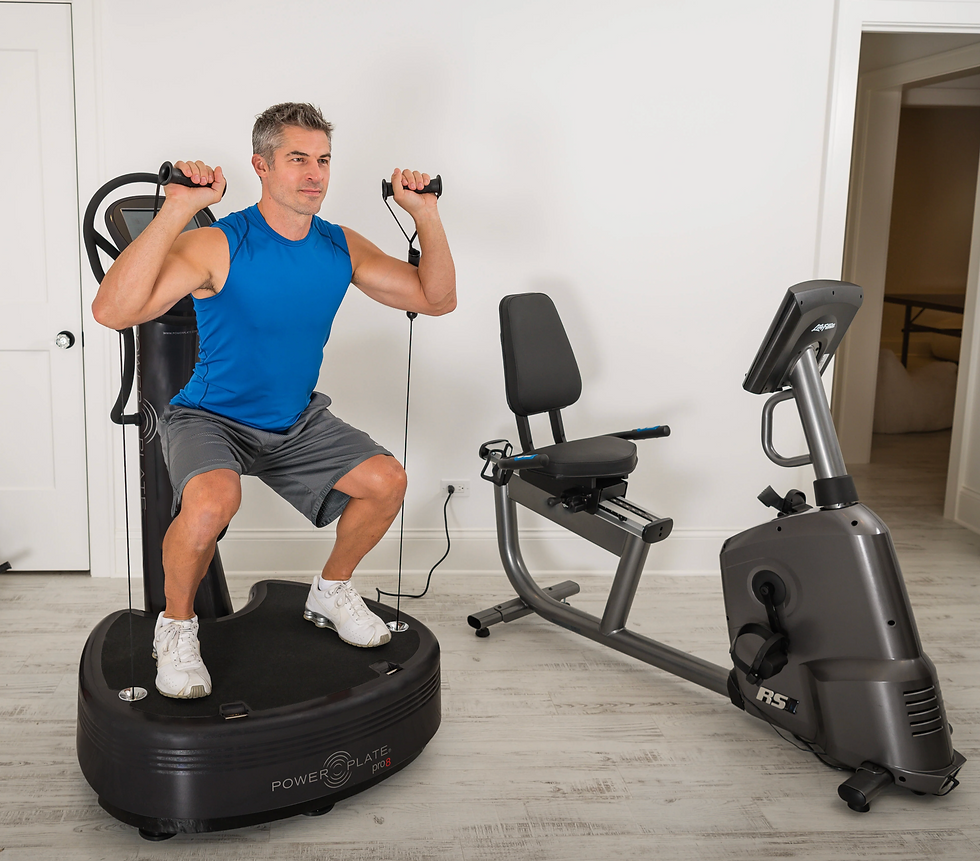
Weeks 4–8
Increase AlterG loading to 50–80%
EMG-guided strengthening
Progressive KAATSU resistance
Targeted osteogenic loading
Weeks 8+
Transition to full body-weight gait
Strength, power, and return to sport/activity progression
Bone health monitoring with REMS

Why Choose the Puerto Rico Hip Institute for Your Recovery?
At PRHIP, we combine:✓ Advanced imaging✓ Evidence-based protocols✓ Modern rehabilitation technologies✓ Skilled physical therapists✓ Collaborative care with Accelera Health & OsteoStrong
Our mission is simple:Help you recover faster, safer, and stronger—with the most advanced hip rehabilitation tools available in Puerto Rico.


Comments